Midlands Medical Conferences
Inaugural Newsletter
Editor Dr Meenal Rana
Welcome to our first edition
When I was invited to lead the editorial for this newsletter, I felt a surge of enthusiasm and anticipation. Yet, a persistent thought lingered - in a world saturated with information, from rapid-fire social media posts to the endless tide of medical literature, do we truly need another newsletter?
Our Mission: Meaningful Curation
I believe the Answer lies not in contributing to cacophony, but in curating what is meaningful - with, perhaps, a touch of fun along the way. Our goal is to create a space that guides readers towards the most relevant and emerging topics in our field. We aim to spotlight current trends, matters deserving attention, and ideas that may soon redefine our practice, while encouraging moments of reflection and engagement.
Celebrating Trainee Voices
As ever, the voices of our trainees are central to our mission. In this edition, you will find a contribution from an East Midlands Anaesthetic trainee, Dr Thomas Ainge, who, during their tenure at Glenfield Hospital, Leicester, led clinical education and sparked new life into routine teaching sessions with their monthly “Gas Letter.” We invite you to read about their inspiring approach.
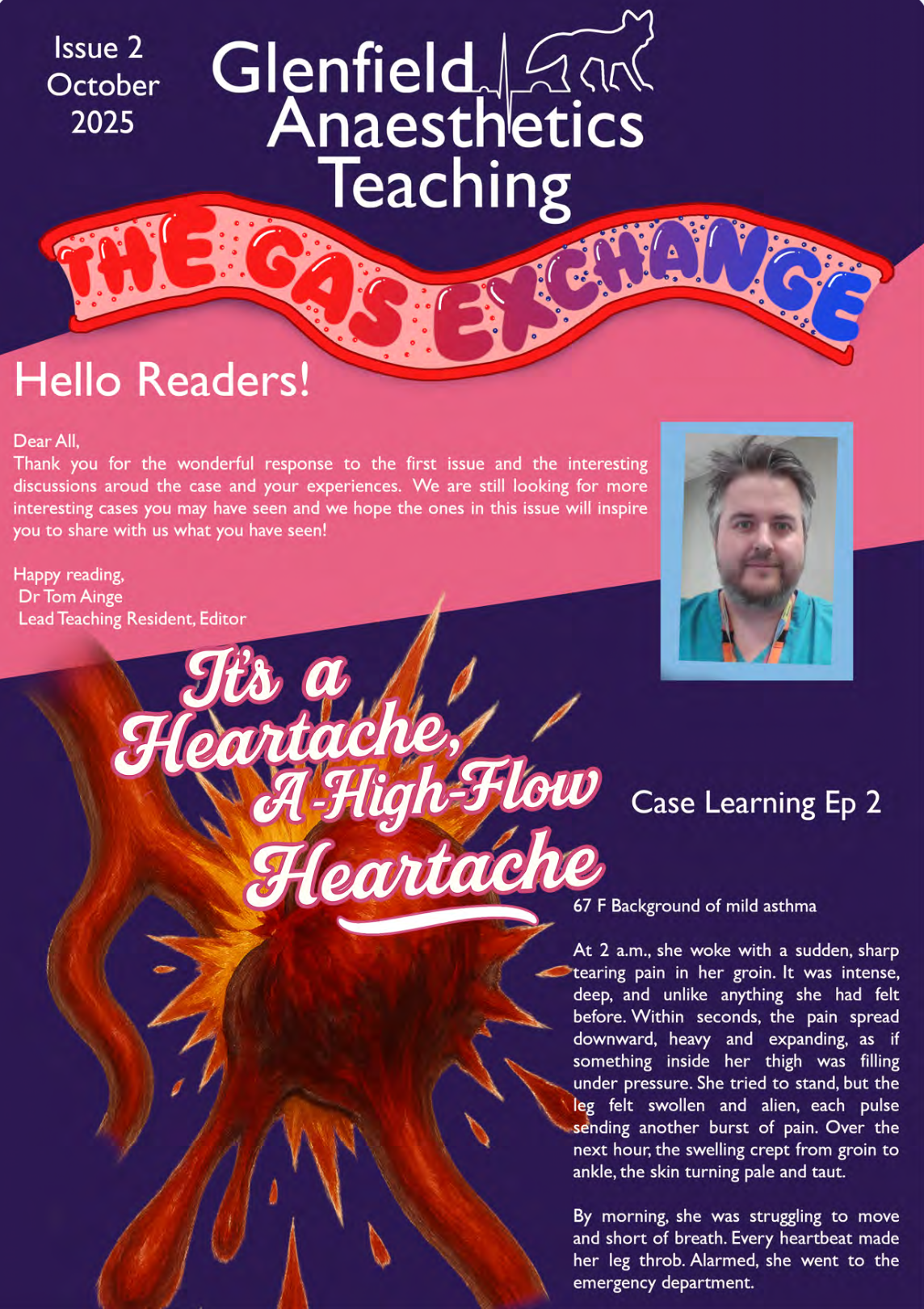
The Gas Exchange started from a frustration I had during training when I attempted to write a traditional case report. While case reports clearly have their place academically, I found the process surprisingly restrictive.
The format felt rigid and oddly disconnected from how clinicians actually talk about cases. When we discuss interesting or unusual cases with colleagues, we rarely present them in the highly structured format expected in journals. Instead, we tell stories: what happened, what made the situation unusual, the decisions that were made at the time, and what we took away from it. Those conversations tend to be engaging, memorable, and educational. The case report I was trying to write, however, felt as though it had been carefully designed to remove most of the interesting parts.
At roughly the same time, I had also found myself getting back into reading more widely again. Rediscovering the pleasure of reading reminded me how powerful storytelling can be in holding attention and making ideas stick. That made me start thinking about whether some of the same principles could be applied to medical education. If narrative works well in books, perhaps it could also work as a way of presenting clinical learning in a more engaging way.
From that idea, The Gas Exchange began to take shape. The concept was fairly simple: short, engaging pieces of educational content that can be read quickly but still leave the reader with something useful. I started to think of it as "minimally invasive education", learning that fits into the small gaps that exist during a working day rather than requiring a long uninterrupted stretch of time.
The magazine format seemed like a natural way to bring this together. It allows a mixture of content that would not normally sit side by side in a traditional journal. One article might be a narrative case discussion, another a historical vignette from the development of anaesthesia, and another a short teaching piece reflecting on clinical practice. It also has the advantage that, unlike a formal journal submission, it allows a little more creative freedom. If I want to include an illustration, a slightly tongue-in-cheek title, or a narrative style that would probably cause an editor mild palpitations, the magazine format allows for that.
Another aspect of the project has been the visual side of education. Designing layouts, creating Illustrations, and shaping the overall aesthetic has allowed me to explore how visual storytelling can complement written teaching. The aim is to produce something that feels approachable and distinctive, educational but also enjoyable enough that people actually want to read it.
Although the project started as a personal experiment, it would benefit enormously from wider involvement. Anaesthesia trainees encounter fascinating cases, practical lessons, and historical curiosities every day, yet many of these never reach a wider audience.
If the idea of The Gas Exchange sounds interesting and you would like to express interest in contributing or being involved in future issues, please feel free to get in touch. The intention is for the project to grow into something collaborative, shaped by the experiences and perspectives of trainees who want to share and develop this style of educational storytelling. Or if you feel inspired, have an idea, get it going and use your initiative!
Featured Article:
Leaning into Brave Conversations
A standout piece in this issue is the article by Dr Jess Morgan, “Leaning into Brave Conversations.” It explores the delicate balance between offering honest, sometimes difficult feedback to colleagues while remaining constructive and supportive. In high-stakes clinical environments, where decisions are complex and pressures are high, these conversations can be challenging, yet essential. It is a thoughtful and succinct reflection on how we navigate this space with professionalism, empathy, and clarity.

Most health professionals turn up at work with the intention of being kind. Yet many of us have been on the receiving end of difficult and unpleasant experiences. From rudeness and incivility to discrimination and racism, from bullying and harassment to burnout and mental illness, there are countless examples of experiences that we carry that we often feel unable to speak about. So why is it so hard to lean into these conversations, to be vulnerable and to challenge behaviours that are harmful?
From as early as medical school, we begin to assume the professional behaviours of a doctor. In doing so, we absorb the culture of stoicism that is deeply ingrained in the system, one where our emotions don’t feature. Where we get on with the job. We’re taught empathy with a heavy dose of professional detachment. Yet the reality is that we are human, and with humanity comes feelings.
I was a paediatrician when I experienced burnout and mental illness. For years I felt ashamed, hiding my experience like some dark secret. A few years ago, I found the courage to share my story, first with one or two colleagues and slowly with others. As I did, an unexpected thing happened: other people began sharing theirs. It was as though modelling vulnerability had somehow offered colleagues permission to connect with how they felt. Suddenly, I saw people’s behaviour through a different lens, a lens of understanding and compassion.
This brought me to the work of Brené Brown who’s dedicated her career to researching vulnerability, shame and leadership. Her books and podcasts marry wisdom, science and humanity and have connected me with the concept of courage. I’ve never been a particularly brave person, in fact many of my behaviours have been fuelled by a deep need to people-please and avoid conflict. Over recent years however, I’ve realised that these attitudes haven’t served me well and that healthy conflict is an essential component of effective teamwork. With that in mind, I’ve channeled my inner Brené and begun to lean into difficult conversations, opening the door to opportunities for connection, growth and change.
Let’s consider a practical example. We’re in the staff Room and I overhear a racist comment made between colleagues. Shamefully, in previous years, I would quite possibly have let it go, my silence unknowingly colluding with the behaviour. Now, I pause and consider how to respond, not with accusation and judgement but with compassionate curiosity.
Evidence shows that most one-off instances of incivility can be successfully addressed with a ‘Cup of Coffee Conversation’, an informal conversation between peers. No disciplinary consequences or sanctions, just frank feedback delivered with kindness and compassion. When we lean into these conversations with genuine interest and connection rather than judgement and accusation, we give others space to respond rather than react.
Kim Scott, author of RAdical Candour, offers a framework for difficult conversations that encourages us to “care personally whilst challenging directly”. When we sugar coat feedback to be “nice” or avoid clarity so as not to offend, we deprive people of the opportunity to grow and develop. When we respond with passive-aggression or flatter someone to their face and criticise them behind their back, we neither care nor challenge. Conversely, when we offer brutally frank feedback without considering how someone might feel, we act from a place of obnoxious aggression. The sweet spot is being able to respond with radical candour- sharing your opinion and feedback directly, whilst also caring for the person, showing vulnerability and offering an opportunity for connection and growth.
Let’s be honest, these conversations are tricky, particularly to start with. They feel clunky and messy. Dr Anna Baverstock, paediatrician and senior wellbeing lead, explains that these conversations never really get easier, but if we’re willing to lean in, we begin to feel more comfortable with feeling uncomfortable.
So, I leave you with Brene Brown’s wise words. “Choose courage over comfort,” and dare to lean into the conversations that others shy away from.
References:
- Civility Saves Lives www.civilitysaveslives.com
- Scott, K. (2017). Radical candor: How to get what you want by saying what you mean. Pan Books
- Brown, B. (2018) Dare to Lead. Vermillion
- Brown B (2021) Atlas of the Heart. Vermillion
“Choose courage over comfort”
Stories Beyond the Surface: A Journey in Medicine and Leadership
In keeping with our commitment to curating thoughtful content, we are delighted to present an insightful interview with Prof Mary Mushambi, Consultant Anaesthetist, now embracing a well-earned retirement.
Prof Mushambi reflects on a remarkable journey from Zimbabwe to the United Kingdom, sharing the challenges of adapting to a new healthcare system while navigating life as an international medical graduate and a woman of colour aspiring to leadership. Her story is not only one of resilience, but of influencing change within systems that were not always ready to listen.
It is often said that the true essence of a story lies in what remains unsaid—the quieter, unedited moments that shape our experiences. This conversation gently brings those moments to light. We invite you to explore this compelling interview and celebrate a truly extraordinary career.
Focus on the Evolving NHS Workforce
We also examine the evolving NHS workforce, with particular attention to the growing role of international medical graduates (IMGs). As an IMG myself, I appreciate the difficulties of adapting to a new healthcare system with its unique medico-legal framework. In these times, with the NHS under heightened strain, caring for sicker patients and striving to meet waiting list targets, it is more important than ever to understand the intricate workings of the system for effective and seamless integration.
International Medical Graduates (IMGs) play a vital role in the UK healthcare system, bringing valuable skills and knowledge to patient care. However, adapting to a new healthcare system can present unique professional, cultural and legal challenges. To support doctors navigating this transition, the MDU is hosting a dedicated IMG conference designed to provide practical guidance, professional insight and valuable networking opportunities.
Taking place on Thursday, 30 April 2026 at The Midland Hotel, Manchester, this full-day conference is open to international medical graduates across primary and secondary care. Whether you’re newly arrived in the UK, preparing to start your first NHS role, or already established and looking to progress in your career, the conference offers a supportive environment to learn, connect and grow.
The event has been specifically designed with the needs of IMGs in mind. Attendees will benefit from a series of expert-led sessions focussed on navigating UK medical practice and understanding the professional expectations within the NHS. Our keynote speakers will provide practical advice and strategies to help attendees build their confidence and succeed in their roles.
Through interactive sessions, delegates will explore medico-legal cases and explore topics such as coping with conflict to help them better understand the legal framework surrounding UK medical practice.
The conference will feature talks from experienced international doctors who have successfully built their careers in the UK. They will share their personal journeys, lessons learned, and practical tips for adapting to the NHS environment. This will help provide reassurance, encouragement and valuable perspective.
The event also offers an excellent opportunity to connect with fellow international doctors and expand professional networks. There will be the chance to exchange ideas, share experiences, and build relationships with peers facing similar challenges in a collaborative and supportive environment.
Beyond professional development, the conference aims to highlight important cultural, ethical and workplace considerations that IMGs may encounter in the UK practice. By openly exploring these differences, the event will empower IMGs with the knowledge and confidence needed to thrive in their careers, whilst delivering high -quality patient care.
Attendance at the conference will also contribute to ongoing professional development, with 6 CPD credits available. Lunch and refreshments will be provided throughout the day, allowing attendees to network and engage with fellow delegates.
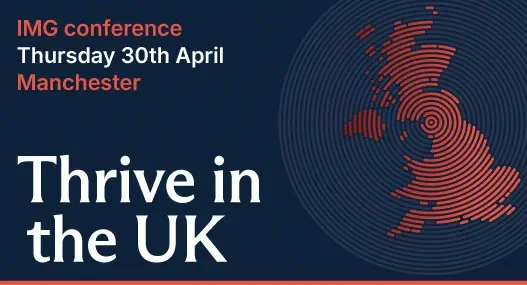
Thursday 30 April 2026
9am - 5pm
The Midland Hotel, Manchester
£25 for MDU members.
£50 for non-members, usually £95.
6 CPD credits
Places are limited so booking early is encouraged to secure a place at this informative and inspiring event.
Adding a layer of storytelling, our “Something Old, Something New” section pairs captivating anecdotes from anesthesia’s colorful history with recent advances from studies, publications, and lively discussions within our medical community.
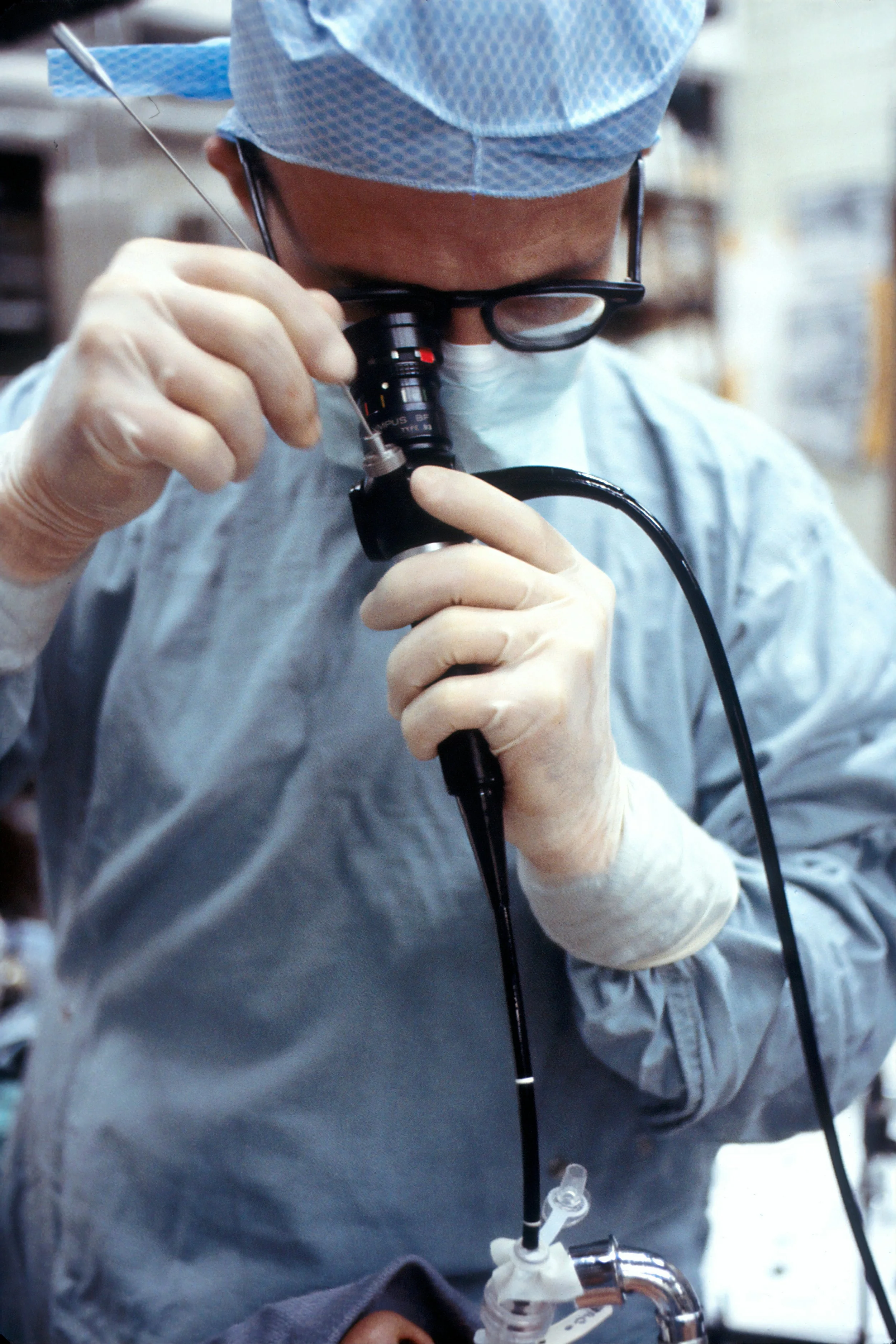
The Evolution of Laryngoscopy
From sunlight and two mirrors to “M–75–E”—if this sounds like a riddle, you’re not entirely wrong. But rather than an encrypted message, it reflects the journey of laryngoscopY from the 19th to the 21st century.
It was the curiosity of Manuel García II that marked a key step in 1854. Using two mirrors—one reflecting sunlight into his throat and a dentist’s mirror placed at the uvula—he became the first to observe the living larynx in motion. He went on to document these findings and present Observations on the Human Voice to the Royal Society in 1855. While not the first to visualise the larynx, his work is widely regarded as the birth of modern laryngoscopy.
I recently came across an article in the British Journal of Anaesthesia from the VCI study group, which made me reflect on how far we have come. The Video Classification of Intubation (VCI) proposes a structured way of documenting intubation—combining blade type, glottic view (POGO), and ease of tube delivery. With evolving Difficult Airway Society guidance increasingly emphasising videolaryngoscopy where available, this feels like a natural next step in improving how we communicate airway management.
Perhaps in the near future, describing an intubation as “M–75–E” will be as intuitive as the techniques we now take for granted—a reflection of how the field continues to evolve, driven by curiosity and the pursuit of safer, more consistent practice.
References
Lapeña JF. Mirrors and reflections: the evolution of indirect laryngoscopy. Ann Saudi Med. 2013;33(2):177–181.
Halliday C, Berry M, Shah S, et al. The Video Classification of Intubation (VCI) score for videolaryngoscopy: a multicentre international feasibility study. British Journal of Anaesthesia, 2025
Professional Development Opportunities
We will also signpost upcoming conferences and educational opportunities, connecting you with events that may further your professional growth.
For those who enjoy a touch of curiosity, there is a hidden detail woven throughout this newsletter.
You may notice that certain letters have been intentionally capitalised. Look closely—collect them as you read and see if you can piece together a word closely connected to our field.
If you think you have found the answer, we would love to hear from you.
Alongside this, we invite you to help us name this newsletter—something innovative, lively, and unique. Share your answers and suggestions at info@midlandsmedicalconferences.org
The winner of each will receive a place at one of our upcoming conferences—a wonderful opportunity to connect, learn, and engage with colleagues across our community.
Delegate registration for the our hybrid conference held on 8th and 9th October 2026 at Crowne Plaza Hotel in Nottingham will open at 6am on 25th April 2026.
We still have some places available for our next Scientific Meeting on 23rd April in Loughborough. You can either attend in-person or join online.
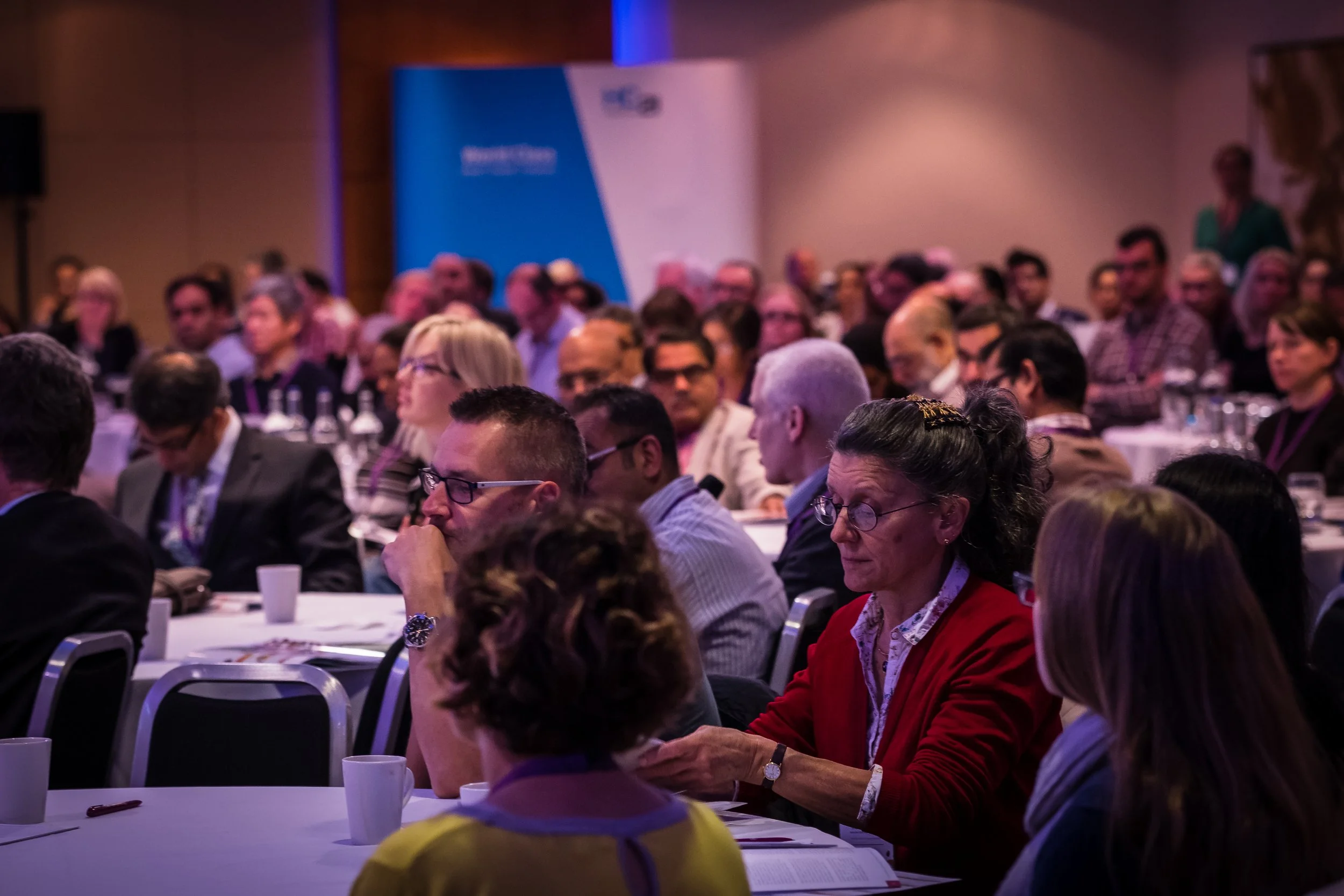
Join us in shaping future editions
This is the first of many issues we hope to share. Your feedback, ideas, and contributions will be invaluable as we strive to create something truly enriching for our community. As mentioned earlier, our aim is to offer a space to pause - for insight, learning, connection, and a little enjoyment. I hope you find inspiration in this inaugural edition.